Sage Klein · 21 October 2026
Shifting Regulatory Pressures Reshaping Verification Protocols for Rare Earth Elements in International Trade Networks
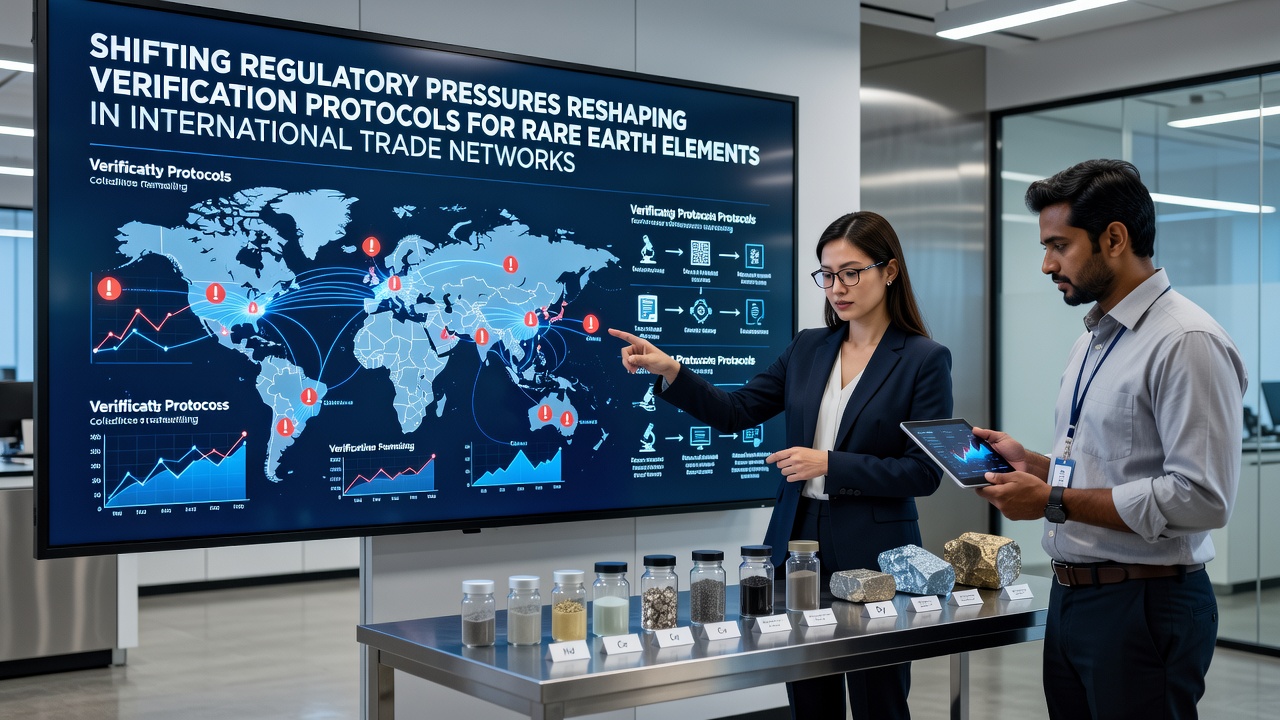
Regulatory frameworks governing rare earth elements have undergone substantial adjustments in recent years as governments seek to balance resource security with environmental and ethical standards in global commerce. These shifts have prompted exporters and importers to adopt more rigorous verification methods that track materials from mine to market while satisfying multiple jurisdictions at once.
China maintains dominant production capacity for many rare earth oxides and continues to adjust export licensing requirements that affect downstream manufacturers in electronics, renewable energy, and defense sectors. At the same time countries including the United States, Australia, and members of the European Union have introduced parallel measures that demand documented proof of origin, processing methods, and compliance with sustainability criteria before materials clear customs.
Evolving Export Controls and Their Reach
Export restrictions implemented by major producers have expanded beyond simple volume quotas to include detailed technical specifications and end-use declarations. In October 2026 several jurisdictions aligned their documentation standards to reduce discrepancies that previously allowed shipments to bypass inspection points in transit hubs such as Singapore and Rotterdam. The alignment means that certificates issued under one national system now undergo cross-checks against databases maintained by partner agencies in other regions.
Those adjustments have forced trading companies to integrate real-time data sharing platforms that link mine-site assays with port-level inspections. Observers note that firms operating across borders now maintain dual compliance teams to handle both the Chinese Ministry of Commerce licensing process and the parallel review conducted by the US Department of Commerce under its export administration regulations.
Verification Technologies Gaining Ground
Analytical laboratories have upgraded their instrumentation suites to meet tightened tolerances on isotopic signatures and trace impurity profiles that serve as fingerprints for specific deposits. Portable spectrometers deployed at extraction sites feed results directly into blockchain ledgers that customs authorities in multiple countries can query without requiring physical re-sampling of every container.
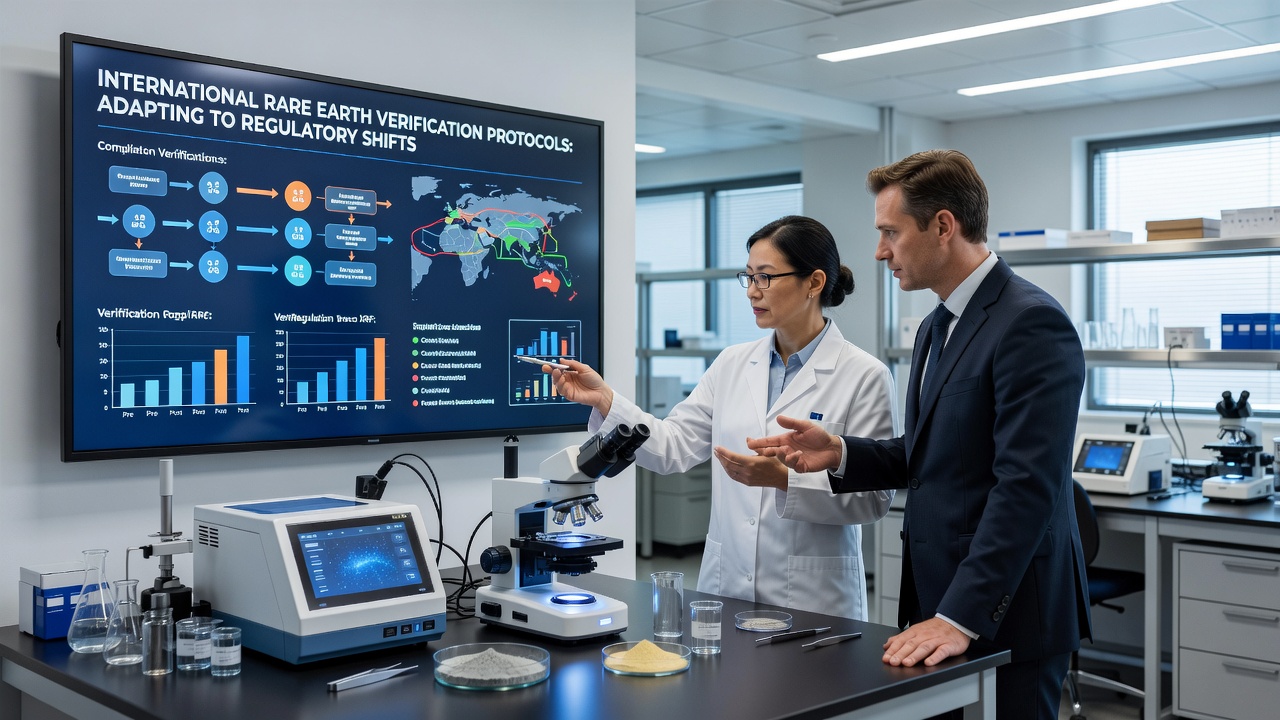
One Australian producer implemented a system that combines neutron activation analysis with digital watermarking of shipping documents, allowing regulators in Canada and Japan to confirm batch integrity within hours rather than weeks. Data shared through this network shows reduced instances of mislabeled material moving between Southeast Asian refineries and European magnet manufacturers.
Regional Responses and Institutional Coordination
The European Commission updated its critical raw materials framework in mid-2026 to require third-party audits of environmental management plans at source mines, while Australian authorities strengthened their own export certification rules to align with those requirements. Canadian regulators have focused on due-diligence reporting that covers both labor practices and water usage metrics at processing facilities.
These overlapping mandates have encouraged the formation of industry working groups that pool testing methodologies and share reference samples. A joint program between the Geological Survey of Japan and the Commonwealth Scientific and Industrial Research Organisation in Australia has produced standardized reference materials that laboratories worldwide now use to calibrate equipment used in trade verification.
Practical Effects on Trade Flows
Importers report longer lead times for shipments originating from newer mining projects in Africa and South America because those sites lack the established assay histories that regulators accept without additional scrutiny. Established producers in Inner Mongolia and Western Australia continue to dominate volumes partly because their documentation packages already satisfy the expanded checklist.
Customs brokers handling rare earth consignments now routinely request pre-clearance reviews that include digital copies of laboratory reports and chain-of-custody records before vessels depart origin ports. This practice has reduced hold-ups at destination terminals yet increased administrative costs that smaller traders pass along to end users in the magnet and catalyst industries.
Conclusion
Verification protocols for rare earth elements continue to evolve as regulatory bodies refine their data requirements and enforcement tools. The combination of tightened export licensing, harmonized documentation standards, and advanced analytical methods has created a more traceable international trade network that satisfies multiple oversight regimes simultaneously. Market participants adapt by investing in integrated tracking systems and coordinated compliance structures that keep materials moving while meeting the documentation thresholds set by authorities in key producing and consuming regions.