Xander Foster · 7 October 2026
How Mobile Spectrometry Tools Are Transforming On-Site Mineral Identification During Early-Stage Exploration in Remote Mining Regions
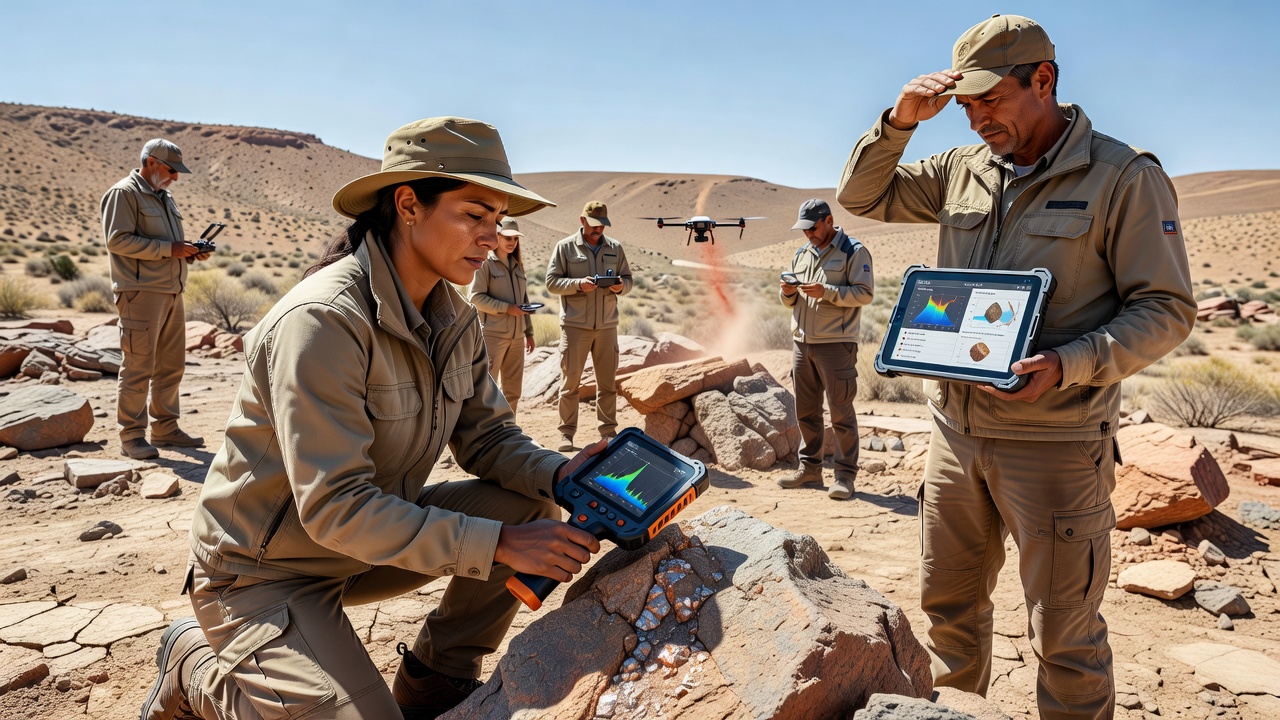
Portable spectrometry devices now allow teams to identify mineral compositions directly at remote sites without shipping samples back to central labs, and this shift has accelerated early-stage exploration timelines in regions where access remains limited by terrain and logistics. Data from field deployments show that handheld X-ray fluorescence units and near-infrared spectrometers deliver readings on major and trace elements within seconds, which supports rapid mapping of alteration zones and ore bodies during initial surveys.
Core Technologies Driving On-Site Analysis
Researchers at institutions across multiple continents have documented how these tools combine laser-induced breakdown spectroscopy with compact detectors to measure elemental signatures in real time, while integrated GPS modules tag each measurement to precise coordinates for later integration into geological models. In practice, operators scan outcrops or drill cuttings on location, then upload spectral libraries that match observed patterns against known mineral databases maintained by agencies such as Natural Resources Canada and Geoscience Australia.
Equipment manufacturers have reduced unit weight below two kilograms and extended battery life beyond eight hours, allowing crews to cover larger areas per day in October 2026 field seasons across northern Canada and Western Australia. Studies published in mining engineering journals indicate that detection limits for elements like copper, gold pathfinders, and rare earth indicators now reach parts-per-million levels under typical field conditions, narrowing the gap with laboratory results.
Applications in Remote Exploration Settings
Exploration companies operating in the Andes and sub-Saharan Africa have reported that on-site spectrometry reduces the interval between sample collection and interpretive decisions from weeks to hours, enabling teams to adjust drill targets while rigs remain mobilized. One project in northern Quebec used portable units to delineate zinc-bearing zones across 12 square kilometers in a single week, whereas previous campaigns required multiple helicopter-supported sample returns.
Integration with cloud platforms further allows geologists based in urban offices to review spectra collected the same day, cross-referencing them with satellite imagery and historical assay data. Government reports from the Australian Department of Industry, Science and Resources note that such workflows have contributed to a measurable increase in the number of prospects advanced to resource definition stages within a single field season.
Data Quality and Validation Practices
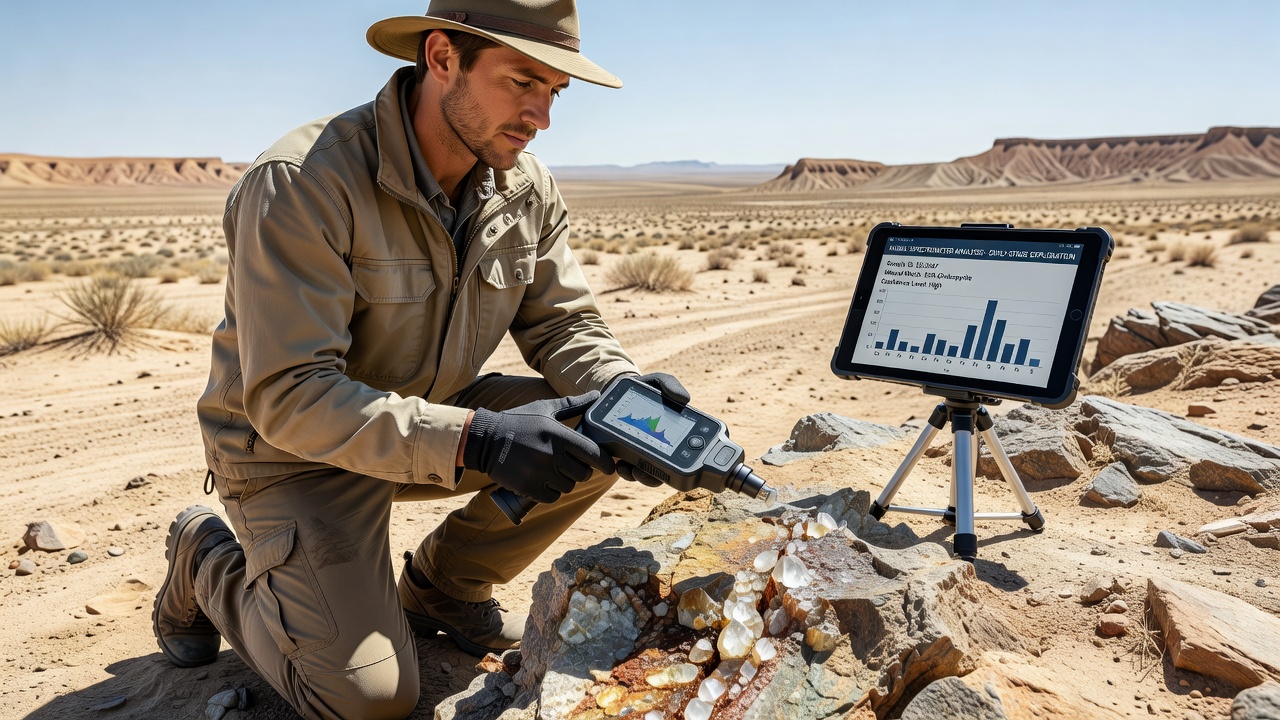
Calibration protocols require daily checks against certified reference materials, and many operators now run duplicate scans on the same sample to confirm repeatability before moving to the next station. Validation studies conducted by the U.S. Geological Survey and European research consortia demonstrate that field readings correlate with laboratory inductively coupled plasma results at coefficients above 0.85 for most base metals when surface conditions are dry and samples are freshly broken.
Software updates released in mid-2026 have incorporated machine-learning classifiers trained on regional mineral suites, which helps distinguish between similar spectral signatures such as those of chlorite and epidote alteration. These refinements have lowered false-positive rates in carbonate-hosted deposits, according to technical summaries issued by industry working groups.
Operational and Logistical Considerations
Remote deployments still face challenges from dust, temperature extremes, and limited connectivity, yet manufacturers have introduced ruggedized casings and offline processing modes that store full spectra for later synchronization. Training programs offered through mining schools in South Africa and Chile now include modules on spectrometer maintenance and spectral interpretation, producing crews that can sustain operations without constant vendor support.
Cost analyses compiled by provincial agencies in British Columbia show that the capital outlay for multiple handheld units is often recovered within two field seasons through reduced assay budgets and fewer missed targets. Fuel and transport savings accumulate when fewer sample shipments leave the site, an advantage that becomes pronounced in areas served only by seasonal ice roads or river barges.
Conclusion
Continued refinement of detector sensitivity and spectral libraries points to broader adoption of mobile spectrometry across early-stage programs worldwide. Regulatory bodies and academic networks continue to publish standardized operating procedures that support consistent data collection, while equipment improvements address remaining constraints in extreme environments. The net effect remains a measurable compression of exploration cycles in regions that were previously limited by slow laboratory turnaround.